
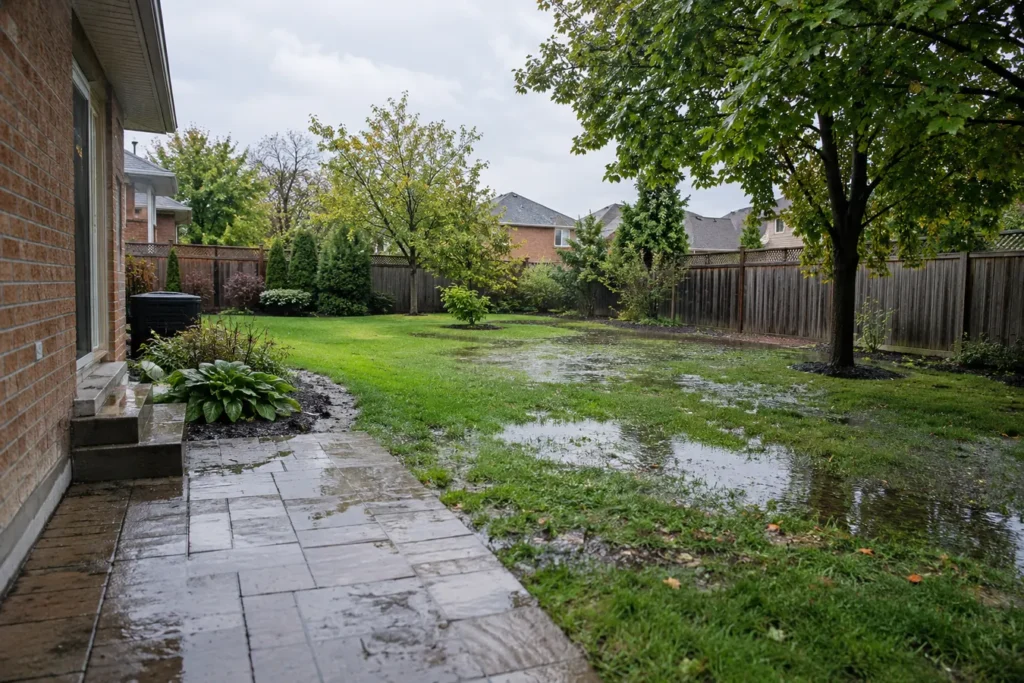
In brief: Town of Milton guidance recommends checking sump operation and backup, grading, eavestroughs, downspouts and basement drains.
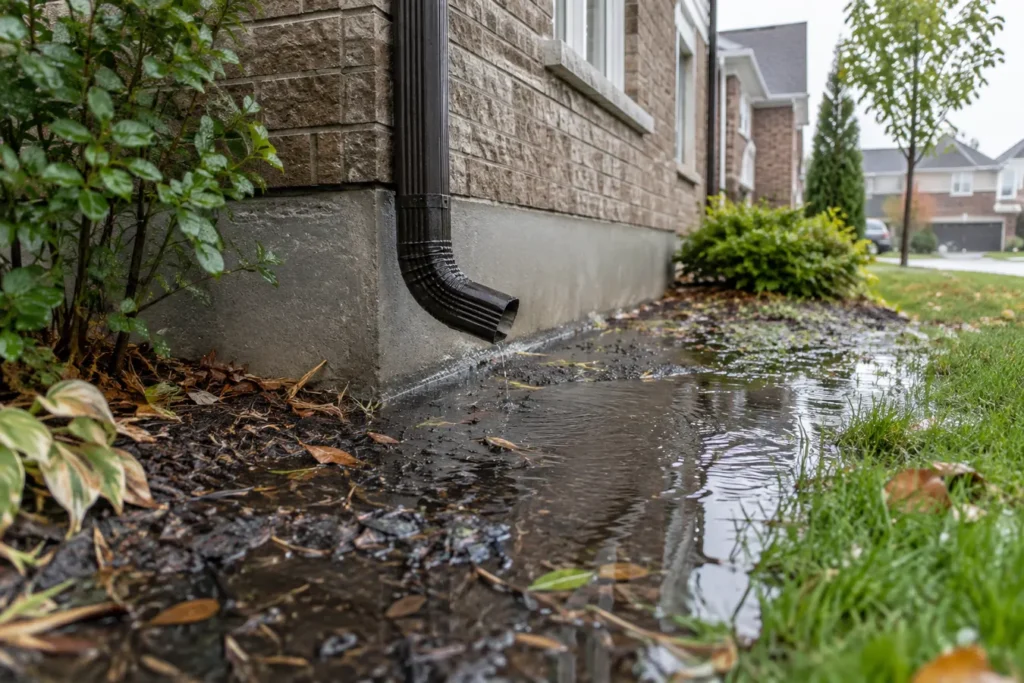
Start with the timing and the first visible sign
Town of Milton guidance recommends checking sump operation and backup, grading, eavestroughs, downspouts and basement drains. A homeowner can record when a mark first appeared, the most intense recent rain or thaw, and whether plumbing fixtures or laundry were being used. A simple timeline is often more useful than guessing at a repair from one photograph.
Look for the first damp spot, not only the largest damaged area. Water can travel along a wall, behind a finish, across a slab or along a pipe before it becomes visible. Photograph accessible evidence safely and note whether it dries between weather events.
If water is actively entering near electrical equipment, avoid the affected area and arrange appropriate urgent assistance. Preserve photographs and make a note of water level and time before cleaning when it is safe to do so.
What the property review should establish
Review the interior evidence, exterior runoff and existing drainage connections before recommending work. The interior review should include the full accessible height of the affected wall, the wall-floor junction, windows, floor drains and any sump pit. Finished drywall or insulation may restrict what can be concluded without selective opening.
Outside, the relevant clues can include roof runoff, downspout discharge, paving or garden beds sloping toward the house, exposed foundation details, window-well condition and where water is permitted to discharge. One symptom can have more than one contributing cause.
Ask how the proposed work addresses the observed route and where the collected water will go. A repair proposal should identify the area covered, access needed, changes to finishes or landscaping, testing and the limits of what is visible before work begins.
How a repair scope is selected
A useful plan addresses the observed pathway and states what remains uncertain. Compare localized repair with broader drainage work based on the evidence. A short affected section, a clear opening and a working drainage system can point to a different scope than water appearing along several walls.
Interior and exterior options solve different parts of the problem. Interior collection may route water to a sump where exterior access is limited; exterior work exposes the foundation wall and its footing drainage. Existing connections, property boundaries and restoration influence feasibility.
A proposal should separate the primary repair from optional improvements such as backup power, window-well corrections or surface grading. This makes the quote easier to compare and helps avoid promising that a single component will solve every source of basement water.
Access, disruption and limitations
The guide is general information; the actual property, permits and existing connections control the scope. If the basement is finished, discuss what must be removed, protected or replaced. Outside, access around decks, patios, utilities, air-conditioning units and landscaping may be as important as the length of foundation wall.
Ask what happens if concealed conditions differ from those visible during assessment. The condition of old coatings, drain connections and foundation openings cannot always be established until work exposes them. The final scope should account for those findings.
No repair can be chosen confidently from a wet photograph alone. An assessment should connect the symptom, probable route, drainage destination and chosen method, while stating remaining uncertainty.
What Milton asks homeowners to check
The Town of Milton recommends testing the sump pump, considering a battery-operated backup, keeping basement flood drains clear, grading the property so water runs away from basement walls, and checking eavestroughs during heavy rain. Its guidance says downspouts should extend at least 2 metres from basement walls. The appropriate outlet still needs to respect the actual property and local drainage rules.
For rising water from a river, stream or lake, the Town directs residents to Halton 311 and Conservation Halton, and to 911 in an emergency. Overland flooding associated with blocked culverts, ditches or catch basins is directed to Milton Operations Services. Wastewater backup is directed to Halton 311. These reporting routes do not replace immediate safety decisions or an insurance call after damage.
The Town of Milton flooding page explains sump and backup checks, grade and roof drainage, downspout extension and reporting routes. It directs wastewater backup enquiries to Halton 311 and overland flooding concerns such as blocked culverts to Milton Operations Services.
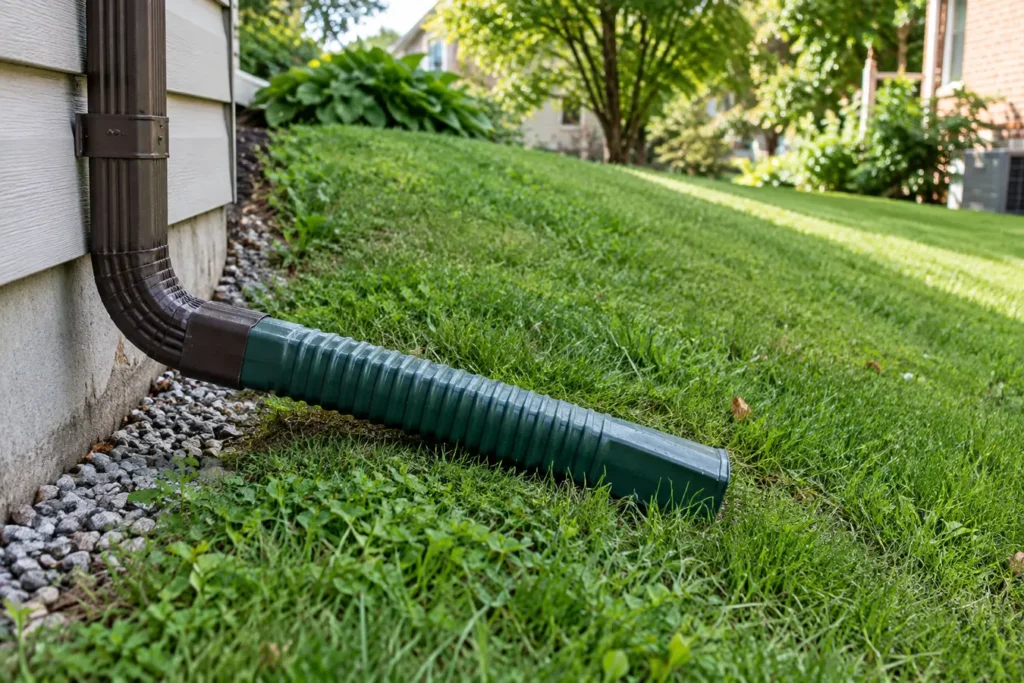
Separate what is observed from what is inferred
A visible symptom is a starting point for investigating milton basement flooding & heavy rain, not proof of a particular failed component. Record whether the wet surface first appeared during a short intense storm, several days of rain, a thaw, or ordinary plumbing use. Also note whether the problem is isolated to one location or follows more than one wall. Those differences alter which routes deserve attention.
Review the actual water route, access and drainage destination. The assessment should state what is directly visible and which conclusions remain provisional because materials conceal the wall or floor. A fresh stain can reflect a route that began higher up or farther away. If an earlier repair exists, keep its invoice and scope available; it may explain what was treated and what was never included.
Follow collection and discharge as well as entry
A waterproof layer, crack treatment or drain is only part of a water-management system. Ask where roof runoff lands, whether the grade holds water beside the wall, how footing drainage is connected and where any pump discharge terminates. The outlet must be appropriate to the property; sending water back toward the foundation undermines the work.
Town of Milton guidance recommends checking sump operation and backup, grading, eavestroughs, downspouts and basement drains. Compare the proposed method against the pathway it is intended to interrupt. If multiple sources are plausible, ask what evidence would distinguish them before a larger project begins. A narrow repair may be suitable where one opening is confirmed, whereas repeated water along a long perimeter can justify assessing a broader drainage route.
Define the boundary of the proposed work
Choose measures based on the evidence and their specific purpose. A useful estimate should identify the exact wall, length, opening or component included, the materials and connection points, and whether demolition, spoil removal, permits and restoration are part of the price. This is especially important where buried pipes or concealed finishes may reveal a different condition once opened.
Discuss the handoff between trades where electrical work, plumbing changes, excavation or finished-basement restoration is involved. Ask who coordinates required municipal inspections and what documentation will be delivered. Keep a record of photographs before and after work so later maintenance or a future property owner can understand the drainage route.
Compare alternatives against access and disruption
Exterior access may be limited by a narrow side yard, porch, deck, paving, gas line or neighbouring structure. Interior access may require removing flooring, baseboards, lower drywall or built-ins. Neither side is automatically the right side; the route of water and the work needed to make a durable connection matter more than a generic claim that one method is always best.
A general guide cannot diagnose the property. Ask what a proposed alternative would leave unaddressed. For instance, a pump cannot seal a window interface, a backwater valve does not collect groundwater, and a new surface coating cannot repair a damaged footing drain. An honest scope lists both its intended benefit and its limits.
Plan observation and upkeep after the work
After completion, keep notes during the next significant rain or thaw. Compare the same locations and record whether the sump cycles normally, the window well drains and the exterior outlet remains clear. The first storm after a repair is an opportunity to check performance, not a substitute for a planned completion review and any required inspection.
For milton basement flooding & heavy rain, ask which parts need periodic attention. A pit, alarm, battery, accessible valve, surface outlet and window well each have different maintenance needs. Keep service information and any permit sign-off with the written scope. If a new symptom appears, document its location and timing before assuming it is the same pathway.
How to make the next decision
Collect photographs, a timeline of events and records of previous repairs. A written assessment can distinguish what is visible, what still needs investigation and which measures address each possible route.
Separate maintenance steps from construction work. Cleaning a drain, checking a float and redirecting surface water may be sensible, but none proves that a recurring foundation leak is resolved. Ask for a scope that matches the evidence.
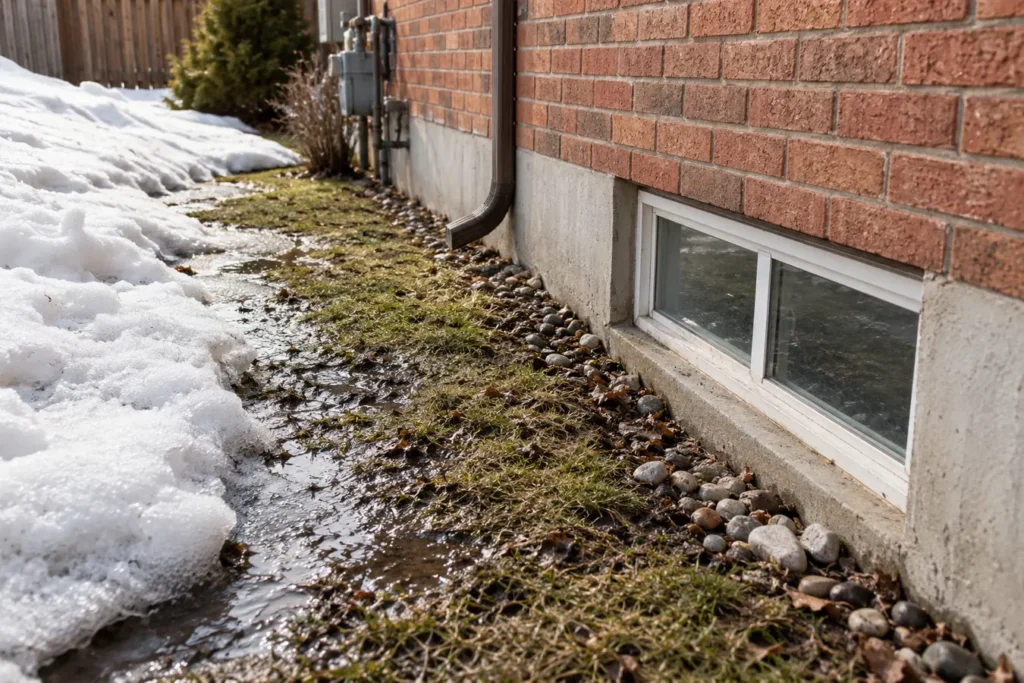
Common questions
Can milton basement flooding & heavy rain be assessed without opening finished walls?
Visible clues can narrow the possibilities, but concealed conditions may require careful access before the source is confirmed.
Does a sump pump solve every basement leak?
No. A sump manages water delivered to its pit; a window, crack, plumbing leak or sewer backup can need a different response.
What should I prepare for an assessment?
Record timing, water locations, rain or snowmelt conditions, past repairs and accessible photographs. Note whether the sump ran and whether any floor drain backed up.