
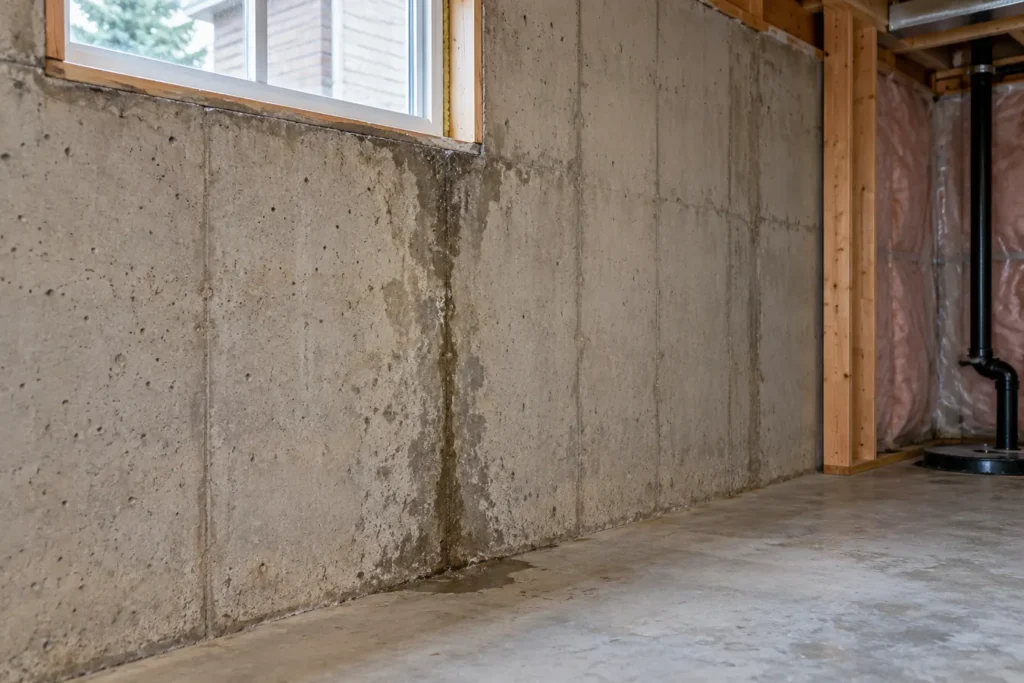
Start with the timing and the first visible sign
Answers to frequent basement water and drainage questions. A homeowner can record when a mark first appeared, the most intense recent rain or thaw, and whether plumbing fixtures or laundry were being used. A simple timeline is often more useful than guessing at a repair from one photograph.
Look for the first damp spot, not only the largest damaged area. Water can travel along a wall, behind a finish, across a slab or along a pipe before it becomes visible. Photograph accessible evidence safely and note whether it dries between weather events.
If water is actively entering near electrical equipment, avoid the affected area and arrange appropriate urgent assistance. Preserve photographs and make a note of water level and time before cleaning when it is safe to do so.
What the property review should establish
Review symptoms, access and existing drainage before planning work. The interior review should include the full accessible height of the affected wall, the wall-floor junction, windows, floor drains and any sump pit. Finished drywall or insulation may restrict what can be concluded without selective opening.
Outside, the relevant clues can include roof runoff, downspout discharge, paving or garden beds sloping toward the house, exposed foundation details, window-well condition and where water is permitted to discharge. One symptom can have more than one contributing cause.
Ask how the proposed work addresses the observed route and where the collected water will go. A repair proposal should identify the area covered, access needed, changes to finishes or landscaping, testing and the limits of what is visible before work begins.
How a repair scope is selected
The proposed scope should connect the visible evidence to a plausible water route. Compare localized repair with broader drainage work based on the evidence. A short affected section, a clear opening and a working drainage system can point to a different scope than water appearing along several walls.
Interior and exterior options solve different parts of the problem. Interior collection may route water to a sump where exterior access is limited; exterior work exposes the foundation wall and its footing drainage. Existing connections, property boundaries and restoration influence feasibility.
A proposal should separate the primary repair from optional improvements such as backup power, window-well corrections or surface grading. This makes the quote easier to compare and helps avoid promising that a single component will solve every source of basement water.
Access, disruption and limitations
Property-specific conditions govern the final method. If the basement is finished, discuss what must be removed, protected or replaced. Outside, access around decks, patios, utilities, air-conditioning units and landscaping may be as important as the length of foundation wall.
Ask what happens if concealed conditions differ from those visible during assessment. The condition of old coatings, drain connections and foundation openings cannot always be established until work exposes them. The final scope should account for those findings.
No repair can be chosen confidently from a wet photograph alone. An assessment should connect the symptom, probable route, drainage destination and chosen method, while stating remaining uncertainty.
Common questions
Can faqs be assessed without opening finished walls?
Visible clues can narrow the possibilities, but concealed conditions may require careful access before the source is confirmed.
Does a sump pump solve every basement leak?
No. A sump manages water delivered to its pit; a window, crack, plumbing leak or sewer backup can need a different response.
What should I prepare for an assessment?
Record timing, water locations, rain or snowmelt conditions, past repairs and accessible photographs. Note whether the sump ran and whether any floor drain backed up.
More homeowner questions
Does water at a baseboard prove the wall is leaking there?
No. Water can travel along a foundation, framing or flooring before appearing at a baseboard. Record where it first appears and compare the location during more than one event.
Is interior waterproofing always less disruptive?
Not necessarily. Interior drainage may require cutting the floor edge and removing finished walls, while exterior work disturbs landscaping or paving. Access and restoration determine the actual disruption.
Can a crack be repaired from inside?
An accessible poured-concrete crack may be suited to injection in some conditions. The crack type, previous repair, active water route and structural concerns must be assessed before a method is selected.
When should a sump pump be replaced?
A pump that fails to start, cycles abnormally, has a stuck float or cannot move water reliably needs investigation. The check valve, discharge and pit condition may also need attention.
Does a backwater valve replace a sump pump?
No. A valve addresses reverse flow through a wastewater line. A sump handles collected foundation water. A property may need either measure, both or neither.
Is a wet window well just a seal problem?
No. A well can collect water because of grade, debris, a missing or blocked drain, snow storage or a window interface. Treat the route that is actually present.
Do all waterproofing projects qualify for Halton subsidies?
No. Halton programs apply to specific measures and require property eligibility and documentation. Generic exterior waterproofing or a pump replacement should not be assumed eligible.
What should I send with an assessment request?
Describe the first wet location, timing, weather, sump behavior, previous repairs and whether finished walls conceal the area. Photos can be useful when safe to take.